Five policy fights every solar supporter should know
This year is shaping up to be an exciting one for solar energy supporters. In addition to rooftop solar, there are many great paths to significantly increase the number of people who can benefit from solar energy. Below are some of the policy fights we’re watching.
Cutting red tape to enable plug-in solar
What if there were a quick, simple way to go solar? There may be one very soon. States across the country are considering legislation to allow plug-in solar. One has already started. Utah’s legislature unanimously passed a law to allow you to buy a small panel system that plugs right into your wall outlet. No need for an installer or complicated permitting process.
Lawmakers in more than a dozen states are considering bills that would do the same. Many have filed bills. They are:
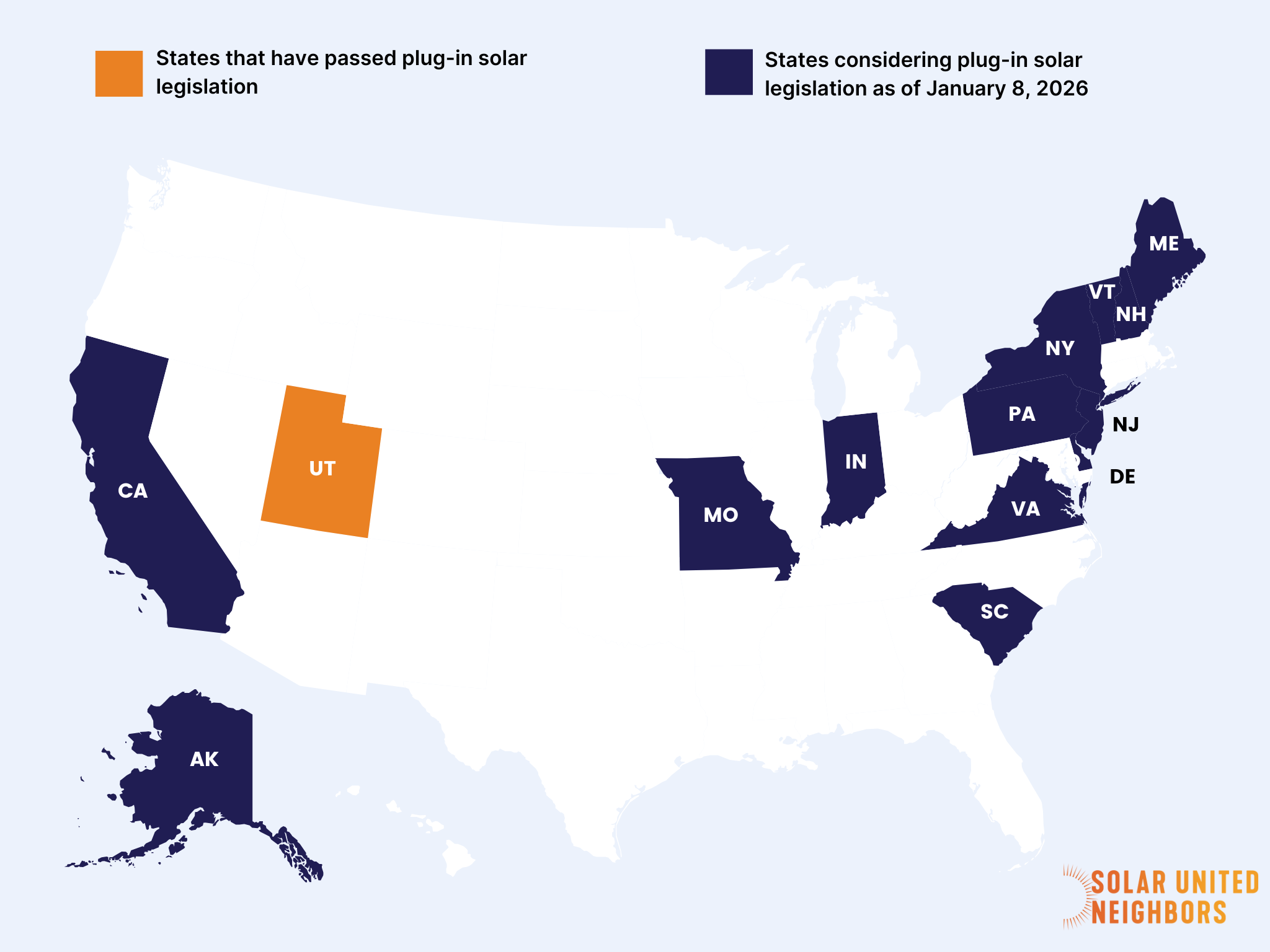
If you live in one of these states, click on the link to contact your lawmakers to let them know you support plug in solar. If you don’t see your state listed, click here.
Getting community solar over the finish line
Lawmakers in Ohio, Pennsylvania, Indiana, and Wisconsin are considering bills that would let individuals buy or lease a share of an off-site solar array. This is known as “community solar.” Participants earn a credit on their energy bill the same as they would if the system were on their own roof. This lets people who rent or have a roof that isn’t good for solar benefit from solar energy.
Standing up distributed power plants
Community solar is one way that folks can join together to produce solar energy that benefits everyone. Distributed power plants (DPPs) are another. DPPs are a network of solar and battery systems that are responsive to electricity supply and demand. This network of customer-owned solar and battery systems work together to feed power back to the grid during times of peak use or an energy emergency. This lowers everyone’s energy costs and makes our electricity service more reliable. In return, solar and battery owners earn compensation to help them pay off their investment more quickly.
Last year several states, Colorado, Maryland, and Virginia laid the groundwork for DPP programs. In those states, we need to make sure the programs are implemented in a way that benefits participants so that DPPs can grow in these markets. Solar supporters can do so by engaging in the rulemaking process. This will show lawmakers in Minnesota, New Mexico, Oregon, Massachusetts and Michigan, who are considering bills this year that DPPs are an essential solar policy.
Protecting fair credit for solar
Across the country, monopoly utilities continue to come after solar owners’ right to fair credit for the energy they generate. Solar supporters have momentum on our side. Last year Virginia regulators rejected Appalachian Power’s request to take away this fair credit in Virginia. They now face a similar request from fellow Virginia utility Dominion Power. In Puerto Rico, the utility removed its request to take away fair credit as part of its current rate case.
In Ohio, we expect a decision on net metering early this year. The end of last year saw an effort by monopoly utility AEP to sneak a request to end net metering. They filed late-breaking comments in the state’s net metering rulemaking process to weaken rooftop solar compensation and limit future access. The filing timing was deliberate, coming at 5 p.m. on Thanksgiving Eve. The comment deadline was that Friday. SUN responded with a filing of our own and triggered a wave of additional public comments from advocates, partners, and solar supporters across Ohio.
In Nevada, the Bureau of Consumer Protection has filed suit to reverse a decision by the Nevada Public Utilities Commission that would take away fair credit from NV Energy customers. Nevadans can contact the Bureau of Consumer Protection to thank them for taking action.
Heading to the ballot box in Arizona
The power to help more people go solar isn’t just in the hands of elected officials or regulators. It’s also in the hands of voters. Arizona has two elections this year that are critical to solar’s continued growth in the state.
The first is the Salt River Project (SRP) board elections in April. SRP is an electric and water utility that serves more than two million people in central Arizona. Historically, the board has pushed anti-solar policies. But pro-solar candidates are close to taking a majority of the board. This year’s election could prove decisive over who controls the board.
In November, voters across the state will elect two of five seats on the Arizona Corporation Commission (ACC). The ACC sets rules for the state’s monopoly utilities. The current Commission has enacted several anti-solar policies. November’s election is solar supporters’ opportunity to change the composition of the board and restore fairness to the state’s solar rules.
Get the latest on solar straight to your inbox.
Fight for your solar rights.
Everyone has the right to go solar. Spread the sunshine nationwide and in your local community by taking action, joining events, and more.