Project keeps community in community solar
- Advocacy,
- Solar affordability
Going solar gives you control of where your energy comes from. But not everyone can install solar where they live. Maybe they don’t have a roof that’s a good fit for solar. Maybe they rent. Thanks to community solar, the sun can still be an option. Community solar allows participants to buy or lease a share of an off-site solar array and have the energy their share generates credited on their bill, the same way it would if there were panels on their own roof.
But what about control? What kind of say can participants have in a community solar project? PUSH Buffalo in western New York has embarked on a unique community solar project they’re developing with close support from the people it will benefit the most.
Work on energy affordability leads to solar
PUSH Buffalo is a nonprofit organization based on the west side of the city. It started as a community group two decades ago that focused on making housing affordable and accessible to people in the community.
Through this work, it created demonstration projects that featured energy efficiency measures as a way to help Buffalonians lower their energy bills. Their connection to energy grew as PUSH Buffalo was one of the organizations that pushed New York to enable community solar in the mid-2010s.
“What drew us into that fight organizationally, was the question of access,” said Garrison Davis, Director of Community Energy at PUSH Buffalo. “Our renter membership base were unable to access the benefits of rooftop solar. We also had a lot of low-income homeowners in substandard housing who couldn’t put on a new roof even if they could find grants to support an installation.”
Fast forward several years later. PUSH Buffalo decided it wanted to take on a community solar project of its own. The organization didn’t go it alone. They had help from Energy Allies, which later became a part of Solar United Neighbors. The two organizations had worked together through the New York Energy Democracy Alliance. Energy Allies had already developed a successful community solar project in Massachusetts and was looking to build on their learnings from that work.
Building a Community Advisory Board
Energy Allies built their Massachusetts project on the premise that everyone should benefit from community solar and have a say in how it’s developed. Typically these projects will cater to subscribers from wealthy neighborhoods, assuming that disadvantaged communities are a risky subscriber group. As a result, less than four percent of community solar projects are built to support disadvantaged communities.
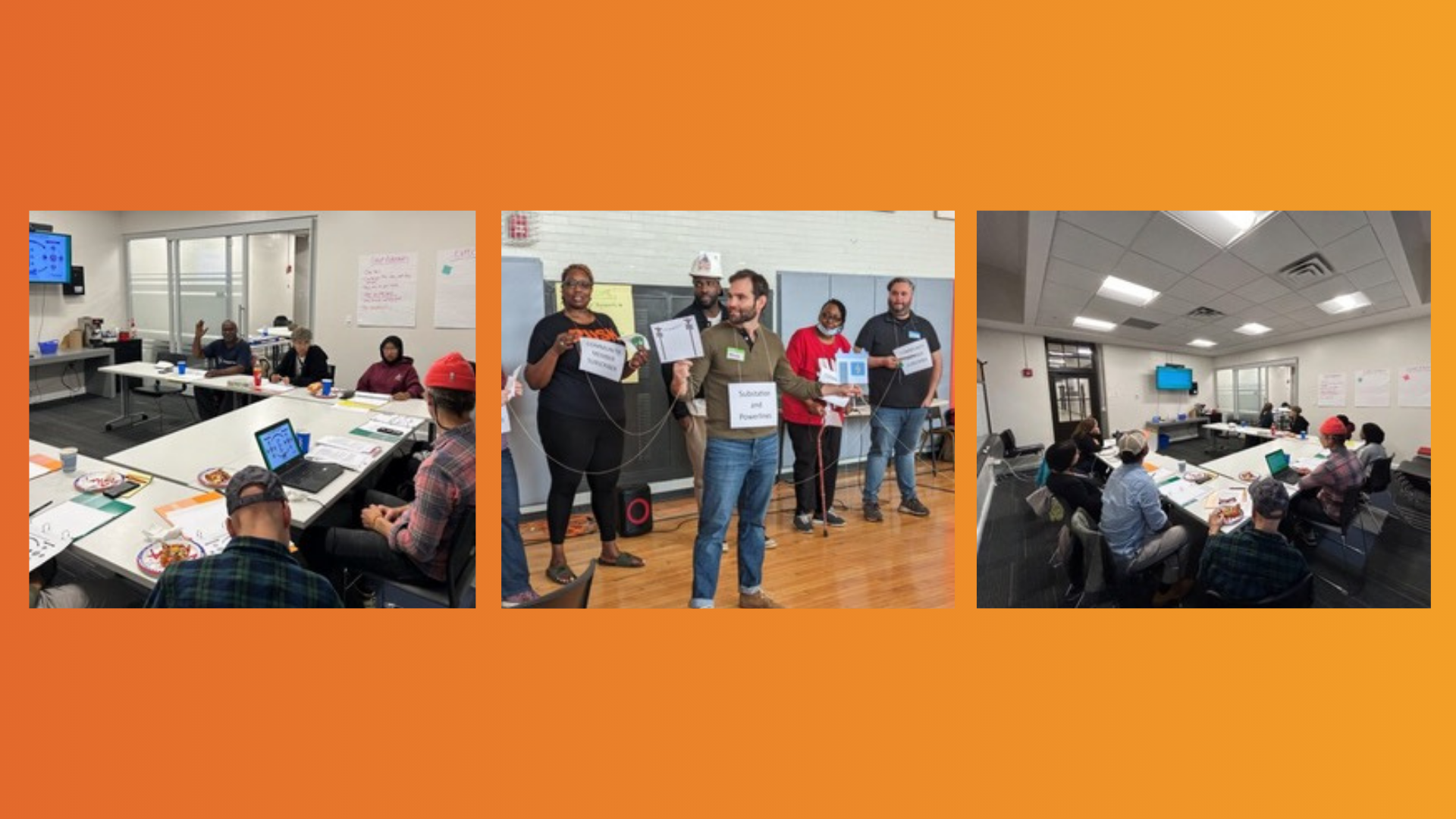
Regardless of where they are constructed, community solar projects often have a difficult time finding a site because of local opposition. Engaging with the community from the beginning is a way to address their concerns. PUSH Buffalo began recruiting its members for people to serve on the project’s Community Advisory Board (CAB) in 2023. The initial meetings started with the basics: how community solar works, why it’s important to address local energy needs and how the project could benefit the community.
Halima Noor joined the Community Advisory Board as a high school student. Solar had been an interest of hers for a while, as her school was also solar-powered.
“We connected via word of mouth,” Noor said. I told a few of my friends about it. It’s a good opportunity to make an actual change in the community, they were eager to get involved because it was direct impact.”
It was also an opportunity for PUSH Buffalo to learn what was important to community members. Over the course of about a year and 18 sessions, they created a community benefits plan that laid out what the community intended for the project. This included, the project’s ownership structure, which they agreed should be at least partially owned by the community through PUSH Buffalo and which community members should be prioritized to receive energy credits from the project.
“We talked about different kinds of energy solutions and became well-educated as to the pros and cons of those alternatives,” said Richard Dread, another Community Advisory Board Member. “We realized solar would be something we could benefit from as opposed to other energy sources,”
The CAB also participated in the process to select a company to install the project. They developed a scorecard to judge each bid and then had a discussion on which proposal best served the board’s goals and after interviews with the finalists, selected the one that did.
“We looked at their past work experience as well as the make-up of the firms,” Dread said. “I didn’t want to support a contractor that didn’t have minority representation in their workforce.”
The project is still under construction and has yet to identify subscribers. As it does, it will have the benefit of having an engaged group of community members who can directly explain the project to their community.
“It was a learning process,” Dread said. “We have more awareness now in the community about what we are doing and getting those people to participate going forward.”
“I learned a lot through other people,” Noor said. “That was the main thing of the board, giving us an opportunity to learn together”Solar United Neighbors is looking to support more community-led solar projects like this one. If this is of interest to you please reach out to us, we’d love to help! If Community Solar doesn’t exist in your state, we could also use your help to advocate for it! Check out our current campaigns here.
Get the latest on solar straight to your inbox.
Fight for your solar rights.
Everyone has the right to go solar. Spread the sunshine nationwide and in your local community by taking action, joining events, and more.