New Orleans residents turning resiliency hubs into something bigger
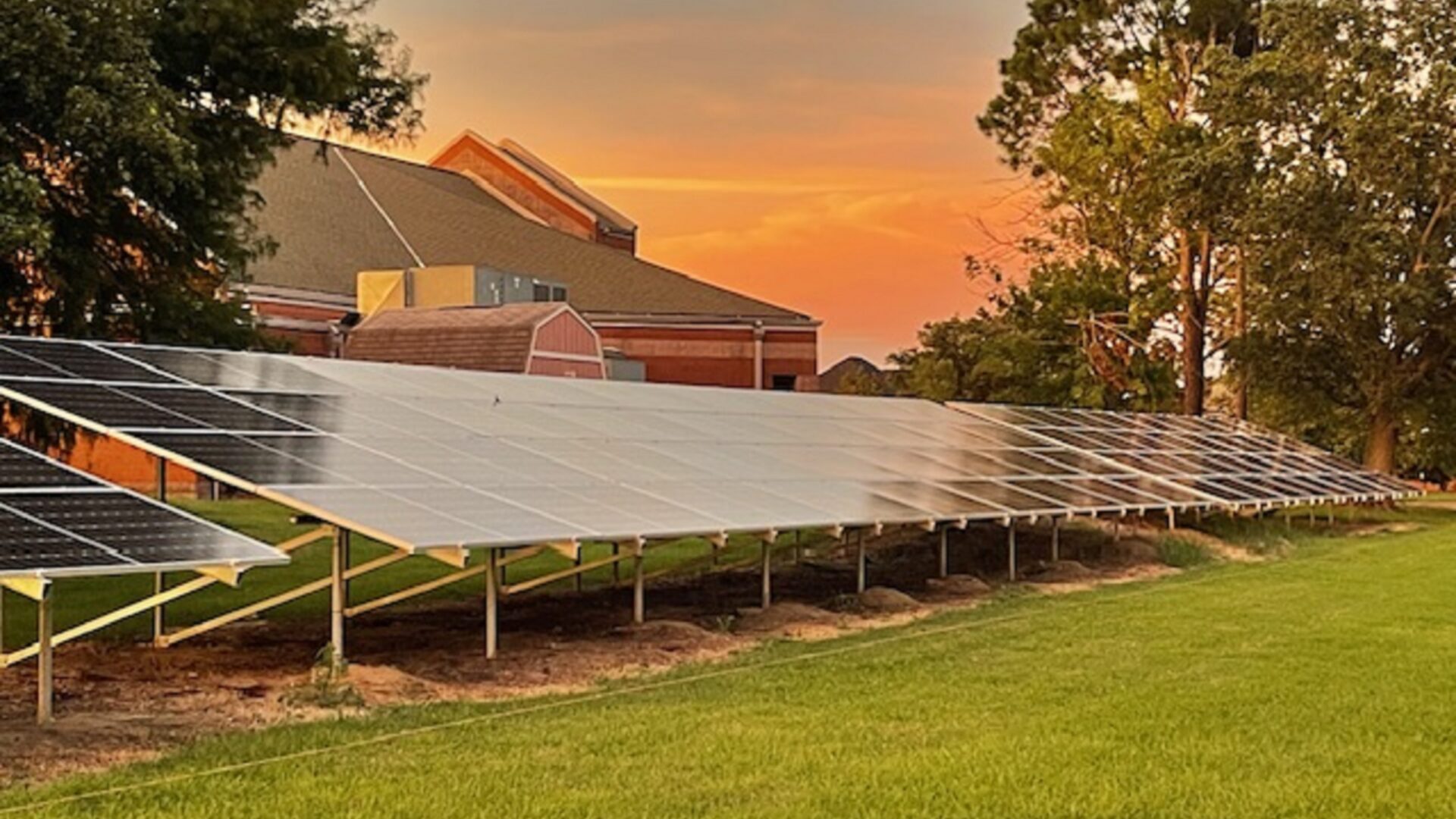
As Hurricane Ida barreled down on New Orleans in 2021, the pastor at Cornerstone United Methodist Church received a call from his state senator. Would a gas generator help the church weather the storm? The generator would only be powerful enough to power a microwave and a coffee maker. The church was two miles from the nearest gas station. A gas generator wasn’t going to cut it.
The congregation is located in a predominantly African- and Asian-American community, where a canal separates it from the rest of New Orleans. If the bridges are closed during a storm, residents risk being cut off from the city.
Ida knocked power out for two weeks. While New Orleans was mostly spared from flooding, more than two-dozen people died because of heat exhaustion or carbon monoxide poisoning from operating fossil fuel generators. This experience drove the community to find a better way to protect itself from storms. Cornerstone United and other local organizations worked through Together New Orleans to create the Community Lighthouse project. The project has created more than a dozen resilience centers across New Orleans to provide shelter when a storm hits.
“When we were approached with a solar alternative it was a no brainer,” said Garreth Johnson, a member of Cornerstone United Methodist Church and its Community Lighthouse program coordinator. “Why hadn’t we thought about this before?”
The centers provide a vital lifeline to the community. They offer a place for people to have air conditioning and snacks, store medicine or baby formula, and have a place to connect with friends and family to let them know they are okay. Cornerstone United’s system is designed to serve the community within a mile and a half of the church.
The Lighthouses are fully volunteer managed and connected across the city. This gives them flexibility. If one Lighthouse is at capacity, people in need can go to another.
“We can run two days without any sort of power from the electric grid,” Johnson said. “The nice part about the panels is that as soon as the sun comes up that rejuvenates our solar system. We can really run in perpetuity as long as the sun comes up.”
A gateway to more a more reliable energy system
While storms have become more frequent in New Orleans, they aren’t constant. This creates an opportunity. “We have a bunch of batteries around town, but most of them aren’t doing anything beyond serving the buildings to which they’re attached,” said Nathalie Jordi of Together New Orleans. Jordi and Together New Orleans advocated using these batteries to create a Virtual Power Plant.
Virtual Power Plants (VPPs) connect energy resources like batteries and solar panels to allow grid operators to better manage supply and demand. This might mean drawing on some of the electricity stored in Cornerstone United’s battery bank when energy demand is high. This saves the need to build additional capacity, or turn on expensive-to-operate power plants and lowers costs for all customers. In return, VPP participants earn credit for providing their resources. VPPs provide a new way to lower costs and improve reliability.
Entergy has a small VPP pilot program, but Together New Orleans jumped on an opportunity to do even more.
In 2022, federal regulators ruled that Entergy had been overcharging New Orleans customers for decades. The company had to repay $190 million. Of that, $30 million went to a fund managed by the New Orleans City Council. Together New Orleans advocated that money be used to expand the Community Lighthouse program and build a robust VPP program at the same time. The New Orleans City Council approved it in December 2025.
“This is special because it came about from a grassroots movement,” Jordi said. “This is something the people of New Orleans wanted.”
Get the latest on solar straight to your inbox.
Fight for your solar rights.
Everyone has the right to go solar. Spread the sunshine nationwide and in your local community by taking action, joining events, and more.