Solar wins! Dominion Energy’s net metering proposal shot down in Virginia
- Energy democracy & policy
Major news: The Virginia State Corporation Commission (SCC) has officially sided with Virginia ratepayers over Dominion Energy, and rejected the company’s request to cut an essential solar benefit.
Dominion, one of the largest monopoly utilities in the country, had proposed to cut its net metering program — a decision which would have devalued the electricity solar owners generate. If the proposal had passed, fewer people would have access to solar, fewer solar jobs would be created, and electricity rates would have increased for all Virginia families.
Our Virginia Solar Movement fought back.
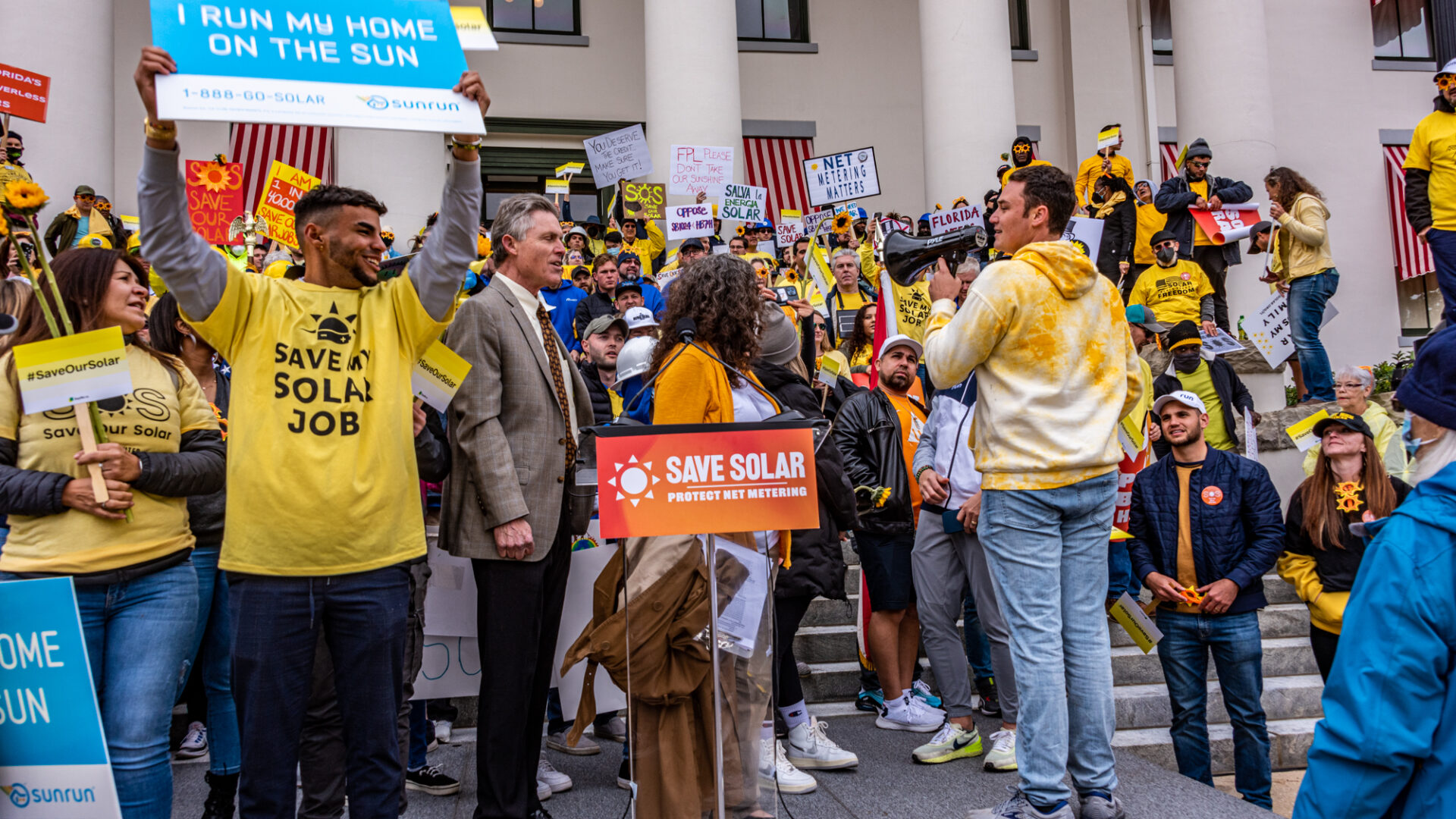
In January, solar advocates made their voices loud, just like they did when Appalachian Power Company (APCo) tried to cut net metering. They submitted a record number of public comments opposing Dominion’s proposal to the SCC docket, and over 50 individuals showed up at the hearing to give live testimony.
Our voices made a difference — the SCC has published their ruling, and it’s in our favor!
Keep the momentum going!
Join the next fight for your energy rights.
The SCC’s Decision: A major win for all Dominion customers
The SCC denied the majority of Dominion’s harmful proposal and ruled to maintain the fair, full retail value of net metering for Dominion Energy customers over a 12-month annual cycle.
The full details on the SCC’s ruling:
- They will NOT shorten the crediting period from 12 months to just 30 minutes. The SCC ruled that the 30-minute netting interval measurement proposed by Dominion can only be used for informational purposes, but that the 12-month crediting period will hold. Keeping the 12-month netting period is essential as it gives solar customers time to cash in on credits they build up when their system produces extra energy in sunny months.
- They will NOT cut solar credits by 32%. Dominion wanted to reduce the net metering credit from $0.14/kWh to $0.095/kW, undervaluing solar and making it harder for solar owners to recoup their investment. The SCC ruled to continue crediting solar at the retail rate. There was a reduction to the avoided cost rate, but this is not a huge loss and is in line with changes to avoided cost compensation that were made in the APCo case.
- They rejected Dominion’s attempt to add a new administrative fee of $100. The SCC did allow Dominion to add a $1/month administration fee, but this is far less than originally proposed.
- They rejected Dominion’s proposal to reduce the 6% NEM cap.
- They rejected Dominion’s proposal to own Net Metering Renewable Energy Credits (RECs).
What this means for Virginia families
Thanks to the SCC ruling, solar owners will continue to get a fair financial return when their systems produce more energy than they can use. The promise of a fair net metering return will incentivize more people to go solar, and that benefits all Virginians.
“As energy prices continue to climb, local solar energy can help families lower their bills by taking control of where their energy comes from,” explains Solar United Neighbors Virginia Program Director, Brandon Praileau, “This reduces costs for all utility customers by limiting the need to build additional power plants and expensive grid infrastructure.”
The SCC’s decision is the right one…[more solar] reduces costs for all utility customers.”
Brandon Praileau, SUN Virginia Program Director
This case is proof that when we come together and fight, we can win.
Solar United Neighbors, our partners, and our amazing community of advocates have now defended net metering against two of the largest utilities in the country within the past 18 months (AEP, APCo’s parent company, & Dominion Energy). If you gave live testimony, submitted a public comment, or shared about this case — thank you! It’s time to celebrate!
Keep the momentum going!
Join the next fight for your energy rights.
Below, learn how net metering works and more on the background of this case.
The value of net metering
Imagine it’s a sunny afternoon and your solar panels are producing more energy than your home needs. The extra energy flows into the grid where it can be used by your neighbors. In return, your utility rewards you with credit on your electric bill that is equal to the current electricity market rate.
That’s net metering, a policy that rewards solar owners for sharing excess energy production with their neighbors.
The current net metering policy provides a path to financial freedom amidst utility rate hikes and ongoing inflation. It helps solar owners maintain consistent bills throughout the year. Net metering savings also help more people access solar because it’s easier to make up the initial investment.
But net metering doesn’t just benefit solar owners. More solar energy flowing to the grid reduces energy costs for everyone. It reduces the need for utilities to build out expensive energy infrastructure, like peaker plants, gas pipelines, or transmission lines.
Dominion Energy’s failed proposal
Dominion wanted to significantly reduce fair crediting to solar. Here’s what they tried, and failed, to get approved:
- Cut solar credits by 32%. Dominion wants to reduce the net metering credit from $0.14/kWh to $0.095/kW, undervaluing solar and making it harder for solar owners to recoup their investment.
- Shorten the crediting period from 12 months to just 30 minutes. This change doesn’t give customers adequate time to get credit for producing more energy than they consume.
Brandon Praileau, Virginia Program Director at Solar United Neighbors, shares that this proposal, if passed, “would rob future solar owners of an opportunity to save on their energy cost,” as well as rob all Virginians of a way to hedge against rising energy costs.
Massive public support for net metering in Virginia
Solar supporters fought hard this winter to convince the SCC to protect net metering, often using our talking points to highlight the value of net metering to the grid and Commonwealth as a whole. On January 20 and 21, the SCC held an evidentiary hearing where they read public comments, heard in-person testimony from solar advocates, and heard expert witness testimony from intervenors, like SUN, and Dominion.
Supporters submitted 1,300 written public comments in the docket, a record amount, and over 50 people signed up for in-person or telephonic testimony. Our phone banking volunteers helped make over 100 calls to spread the word and drive this historic surge in public engagement.
Get the latest on solar straight to your inbox.
Fight for your solar rights.
Everyone has the right to go solar. Spread the sunshine nationwide and in your local community by taking action, joining events, and more.