Solar, before and after: the life cycle of solar panels
- Factsheet
Solar, before and after: the life cycle of solar panels
Solar energy is the cleanest, most affordable, most abundant energy source on Earth. Despite the constantly evolving solar policy landscape, the future is bright. Solar continues to lead new electricity generation, and over half of new electricity in the US is now powered by renewables. That’s good news for the environment and for communities powered by solar.
Like any technology, solar panels have a footprint. What goes into a solar panel before it reaches your roof — and what happens when it’s no longer in use?
How solar panels are made
It’s a complex process to turn raw materials into a finished solar panel. The components of your solar panels will likely travel around the world before they reach your roof.
Most solar panels in the United States use silicon as their main component. Silicon starts as sand and is abundant on Earth. But converting it into the high-grade silicon needed for solar panels requires a lot of energy. Creating one kilogram of this high-grade silicon requires about as much energy as using a standard oven for seven hours.
Once the silicon is purified, it is treated and shaped into cylinders. Then, the cylinders are sliced into super-thin layers and coated to absorb sunlight. At this stage, silver is added to conduct electricity. A complete solar panel only has about 20 grams of silver in it, which is about the weight of a single AA battery. Despite only using a tiny amount, silver is the most expensive material in solar panels — it can represent 10% of the cost of the panel.
To construct the solar cells — the device that converts sunlight to electricity — the thin sheets are layered and connected with copper wires. Many of these manufacturing steps take place in China, Malaysia, Vietnam, and South Korea.
Finally, to make the panels, individual cells are encased in protective layers, framed in aluminum, and sealed with glass or plastic. About 75% of the world’s solar modules are manufactured in China, but U.S.-made panels do exist and are growing in availability.
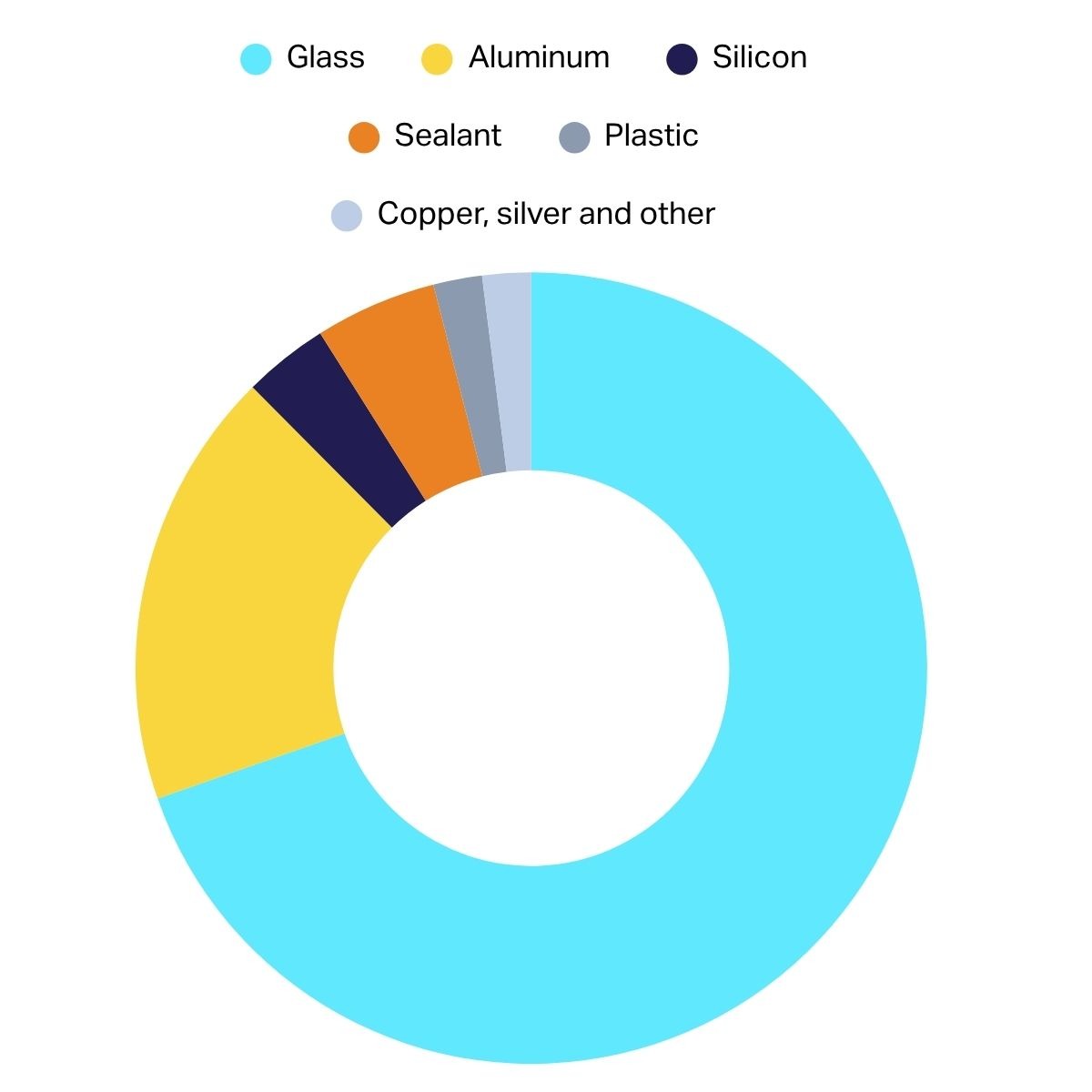
Source: Chen et. al. 2023
Energy and emissions from panel manufacturing
Though panel production uses energy, it only takes about 12 months for a solar panel to produce more energy than was used to create it. And when manufacturers use renewable energy to make the panels, the process emits even less greenhouse gases.
Once a panel is ready to use, it generates clean energy for 25–30 years or more. Over its lifetime solar energy only emits 3.6% of the carbon dioxide emissions compared to fossil fuels. Plus, since solar energy is generated close to where it’s consumed, it cuts down on transportation emissions, reduces energy loss, and strengthens grid resilience.
Social and environmental impacts of mining
As demand for solar grows, so does the demand to mine valuable materials. Mining can cause serious harm when local communities, livelihoods, and land rights are not respected. That’s why it’s important to enforce strong environmental and human rights standards and innovate ways to use less raw materials in solar panels.
These days, even though solar panels include a very small amount of silver, 10% of the world’s silver is mined specifically for solar panels. Silver mining can cause heavy metal contamination in the areas where it takes place, such as in Latin America, Australia, and parts of Europe. This mining has also particularly affected Indigenous Xinka communities in Guatemala, displacing them from their homes.
Copper mining also poses an environmental risk. When rock has copper in it, it’s usually a very small percentage of the rock itself. To extract the copper, companies generate large amounts of rock waste that pollutes the water and air.
Many of the world’s undeveloped copper reserves are on Indigenous lands, places with water scarcity, and areas with high biodiversity, especially in Chile and the Democratic Republic of the Congo. In northeastern Minnesota, two proposed copper mines have faced fierce local opposition from their potential to pollute waterways and harm wild rice, a sacred grass in Ojibwe culture.
Mining for lithium and cobalt, the main metals used in electric vehicle (EV) batteries and battery storage for solar, also has negative impacts. The major concern over lithium mining is water contamination and shortages in Argentina, Bolivia, and Chile, as well as the inadequate compensation for affected Indigenous communities. Cobalt mining in the Democratic Republic of the Congo has raised alarms for its use of child labor, dangerous working conditions, and role in armed conflict.
These materials aren’t just found in solar panels — they’re also in our electronics, medical technology, and construction materials. By enforcing stricter standards for mining, the footprint of many industries will be greatly reduced.
Can solar panels be recycled?
It’s possible to recycle solar panels, but the industry responsible for this recycling is young and faces economic and technological challenges. Because solar panels last so long, there isn’t a large market for recycling yet. It can be technically difficult, expensive, and energy-intensive to recover the raw materials and components in a solar panel.
The good news is that most of the materials in a solar panel — with the exception of silver — are recyclable, namely the glass, copper, and aluminum. Plus, the waste from solar panels is mostly non-toxic. Waste generated from fossil fuel energy production, on the other hand, contains heavy metals and airborne pollutants that are linked to serious illnesses like cancer and lung disease.
How the solar industry can improve
While solar energy has numerous social and environmental benefits, it is not harm-free. The solar industry has a responsibility to uphold human rights and environmental sustainability throughout the supply chain. By working towards a circular economy, we can use solar to build a truly just energy system. The Solar Energy Industries Association (SEIA) has committed to pursue a circular economy.
1. Refuse
Companies should refuse to mine in active conflict zones, protected Indigenous lands, and areas with high biodiversity. Before starting a mining operation, international law requires companies to obtain free, prior, and informed consent from affected communities. The use of coercive, violent, and corrupt practices to go around local opposition or take advantage of a vulnerable community is unethical, and solar manufacturers should not use materials mined from such projects. Governments should also require more transparency, so solar companies can make informed decisions about their supply chains.
2. Reduce
Better technology means fewer resources used over time. When panels are more efficient and last longer, you need fewer panels to power a home or a community, and you don’t need to replace the panels as frequently.
Technological innovations have already reduced expensive and rare materials in the panel design, and further innovations can make even more progress. Over the years, improvements in solar panel technology have reduced the silver content in panels by over two thirds. This has helped drive down the price of panels and reduced the amount of raw materials needed during manufacturing.
Companies can also work to reduce the environmental impact of the manufacturing process itself. Switching to renewable energy in the manufacturing process could help reduce greenhouse gas emissions and improve the energy payback period of solar panels.
3. Reuse
After approximately 25 years, solar panels will continue producing energy, but at a decreasing rate. But that doesn’t mean the panels should be thrown away! There are ripe opportunities for repairing and refurbishing older panels for secondary uses, such as homes in remote locations or electric bike charging stations.
There are currently many regulatory barriers to a robust market for used panels in the United States. Governments can encourage the repair and reuse of solar panels by creating incentives for repair and updating existing electrical regulations to permit refurbished solar panel equipment.
4. Recycle
Recycling old solar panels can reduce the need for mining and its associated negative impacts. In 2023, the United States exported $838 million worth of electronic waste, often to countries with poor environmental regulations and dangerous working conditions for recycling workers. Developing a domestic industry with strong regulations can help solar panels avoid the fate of the millions of tons of cell phones, appliances, lamps, and computers that end up in landfills every year.
Governments and the solar industry will need to work together to ensure that solar panel materials are put back into the manufacturing stream. There are good examples of this happening in other more well-established industries. For example, 99% of car batteries are recycled. New automotive batteries are made primarily from recycled materials.
What can I do?
Understanding the full life cycle of a solar panel helps us hold the industry accountable while still embracing clean energy.
Considering solar for your home or business?
Research before you buy. Use tools like SolarScore.org to evaluate the ethical and environmental track record of solar panel brands. You can ask your installer for information on where the panels are made, and research if they have commitments to ethical sourcing.
Want to advocate for better solar policies?
Support laws that require manufacturing transparency, fair sourcing laws, and incentivize recycling infrastructure. If a solar project is coming to your community, support projects that uplift local economies and commit to sustainable land practices. Learn about SUN’s ongoing campaigns here.
Fight misinformation.
No industry is perfect, and it’s important to keep the bigger picture in mind. Compared to fossil fuels, solar energy lowers energy prices, democratizes our energy system, and helps keep our air, water, and soil clean. Join us on social media to help share facts about solar.
By being a solar supporter, you are contributing to a healthier, just energy future. Shifting towards more distributed solar is the right choice for our pockets, our communities, and our planet.
Get the latest on solar straight to your inbox.
Fight for your solar rights.
Everyone has the right to go solar. Spread the sunshine nationwide and in your local community by taking action, joining events, and more.